Week 9 - Research and Development
Some context will be given in the spread in the form of text and appropriate images to provide a little insight to the reader whilst giving them a starting point to work from. Considering the theories about younger learners, text with primary and secondary source images won't be enough to keep their attention. Designing illustrations that revolve around will be useful to guide the reader across the content provided.
Content


Children's Life in World War II
Children were evacuated from their homes away from major cities in World War II. This accounted for nearly two million children. They had to live with many difficulties such as rationing and gas mask lessons, as well as being forced to live with strangers due to the circumstances.
As a result of incoming war, to ensure better safety for children, they were evacuated to the countryside and away from their homes and families in the city, being introduced to a different life. Operation Pied Piper in September 1939 was the scheme that was conducted for the evacuation, and apparently was executed with few problems if any.
Evacuees still assisted on the Home Front and contributed to the war effort by taking up several manual labor tasks. Children learned to knit clothes for the armed forces, helped plant crops, collect scrap metal and tending to crops and livestock.
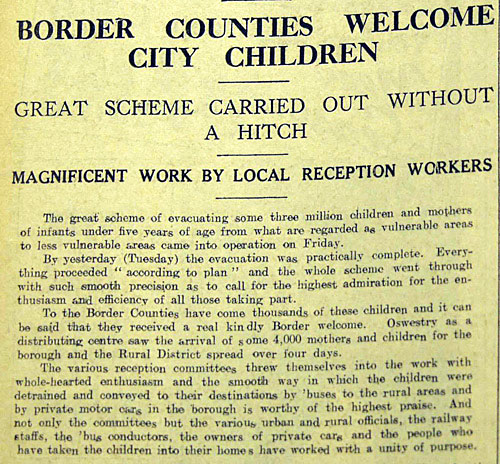
Article from Owestry's local paper

Letter written by evacuee Ellen Howard
Sample Questions
- Looking at source 1, how well-run was the evacuation?
- Looking at source 2, what is the countryside like and how does this make Ellen feel about living in the countryside?
- Looking at source 2, from what Ellen has written about in her letter, how is living in the country different to living in the city?
Sources:
http://www.nationalarchives.gov.uk/education/resources/evacuation-to-shropshire/
Kindertransport
Kindertransport was a scheme to evacuate Jewish children from Nazi Germany, where it was no longer safe because they became targeted by Nazi authorities very indiscriminately. They were freely admitted to few other countries as refugees, most notably Britain, where they were safe.
The first train arrived in Darwich, Great Britain, with 200 children from a Jewish orphanage that was destroyed during the German attack on Jews known as "Kristallnacht". Jewish organisations inside the Reich planned the transport.
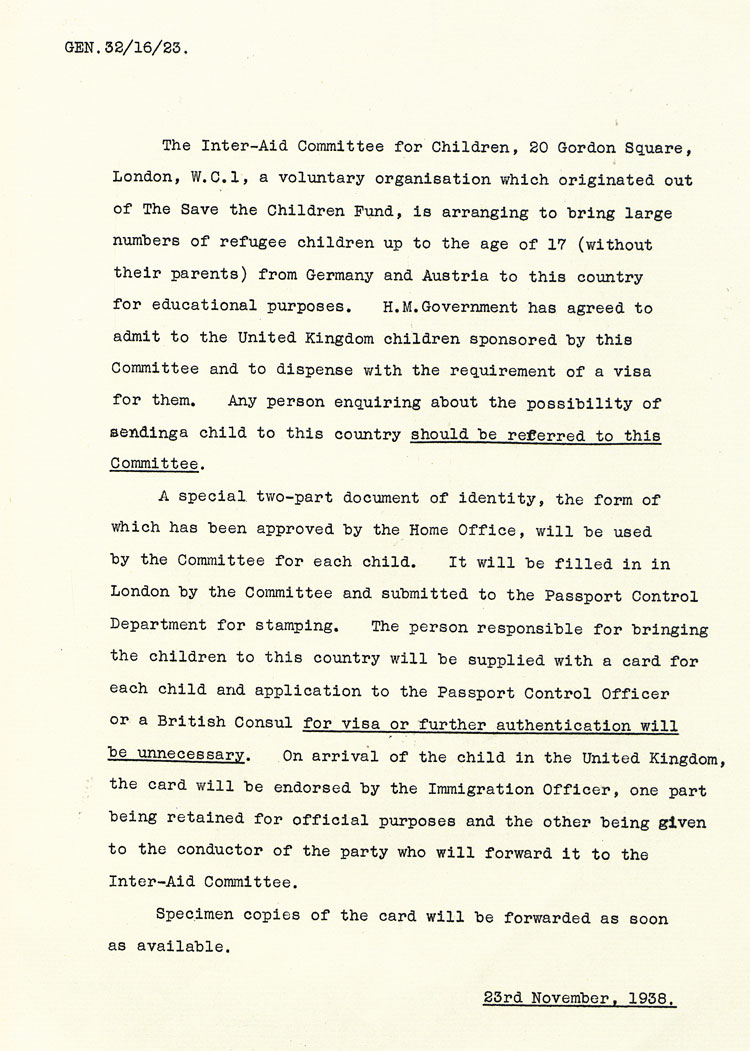
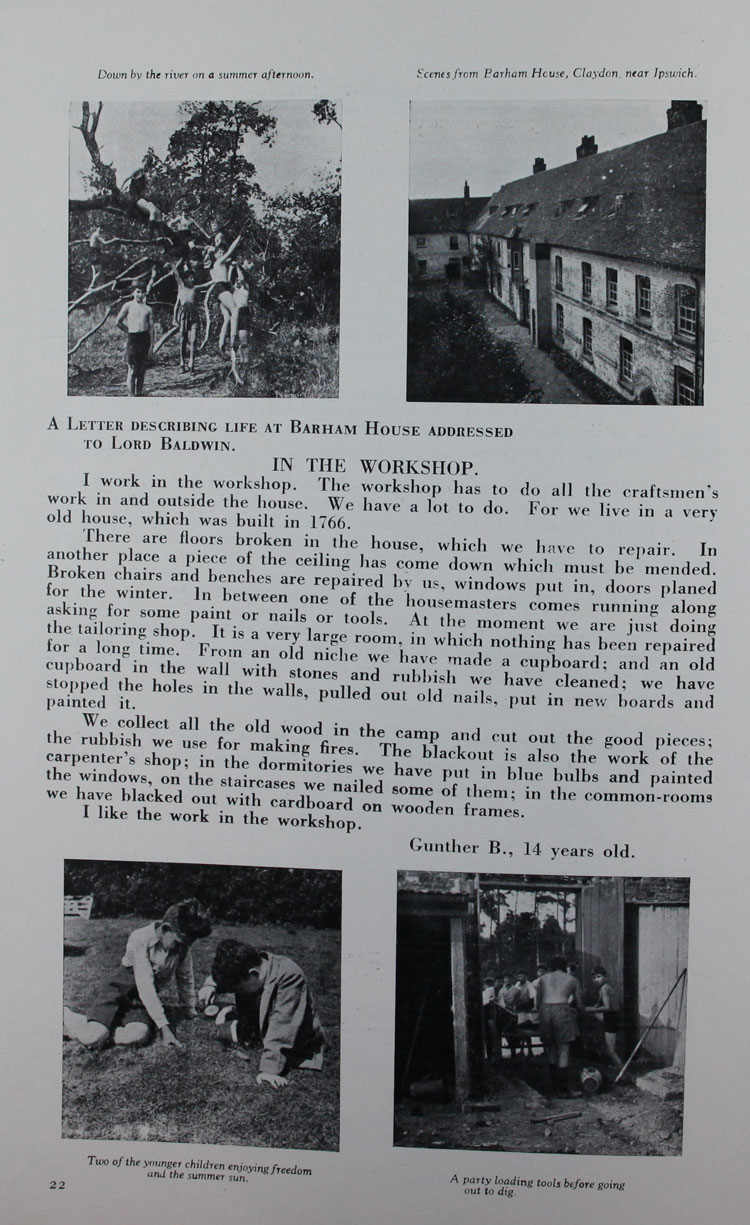
Germany Limited, (HO 213/302)
Sample Questions:
Sources:
http://www.nationalarchives.gov.uk/education/resources/kindertransport/arrangement-transports/
- In the letter, what is being discussed? How did Britain respond to refugees in countries under Nazi control?
- Source 2 is written by a refugee named Gunther. What jobs did Gunther do in the country and how does this help them?
Sources:
http://www.nationalarchives.gov.uk/education/resources/kindertransport/arrangement-transports/
www.ushmm.org/wlc/en/article.php?ModuleId=10005260#
http://www.historylearningsite.co.uk/world-war-two/children-and-world-war-two/
The Home Front of Britain
Sources:
http://www.bbc.co.uk/history/home_front
include doc ref. codes
use sources to produce 3 questions
user testing


Comments
Post a Comment